Our Research
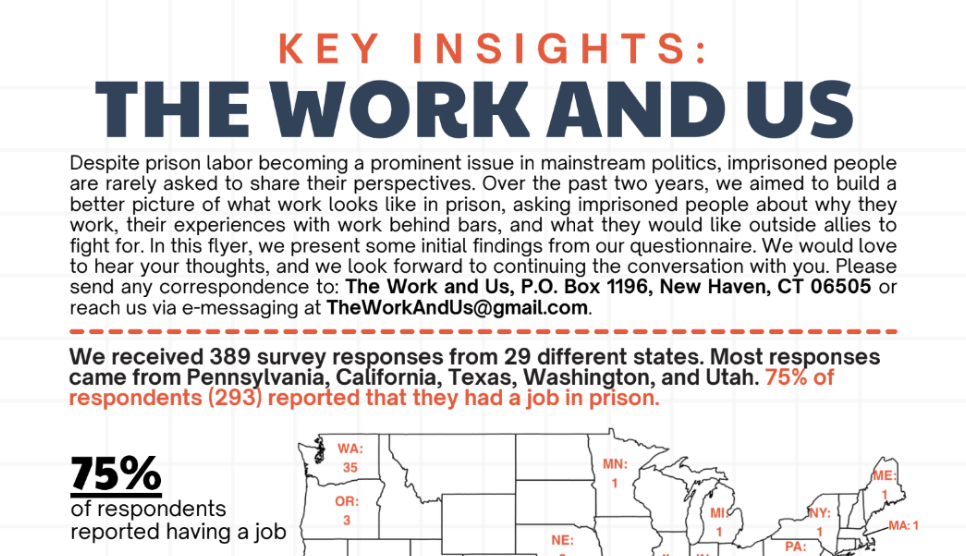
Since the early stages of our project, we have prioritized a participatory methodology that engages directly with incarcerated people, not only to generate more accurate understandings of the actual conditions that people in prison face, but also to democratize the research process and put the design, implementation and meaning making into the hands of imprisoned people.


Our Approach
Why we engage in participatory research.
Despite being closest to the problem, imprisoned people are not seen as experts on what happens inside of prisons. Unlike other approaches to research that rely heavily on institutional statistics or are developed exclusively by people who are not incarcerated, our participatory approach supports incarcerated people in developing research and analysis about their own political conditions and the political direction our movements must take.
Traditional research tends to be top-down: research questions and methods are determined by people with formal education, like scientists or academics. These processes can be extractive. They often take information from the communities they are studying for their own gain. The people being studied have little input or awareness of the final product. In other words, they have little agency over the stories that are being told about them.
We prioritize participatory research methodology and frameworks of accountability that empower imprisoned people to lead and be agents of movements. Unlike other approaches that rely heavily on institutional statistics and/or those that fail to directly ask currently incarcerated people about their experiences, our method involves disseminating surveys directly to incarcerated people, providing a platform for them to share their lived experiences, and develop theories regarding their own political conditions. Through this engaged method, we seek to model a new path for movement scholarship.
Our Work